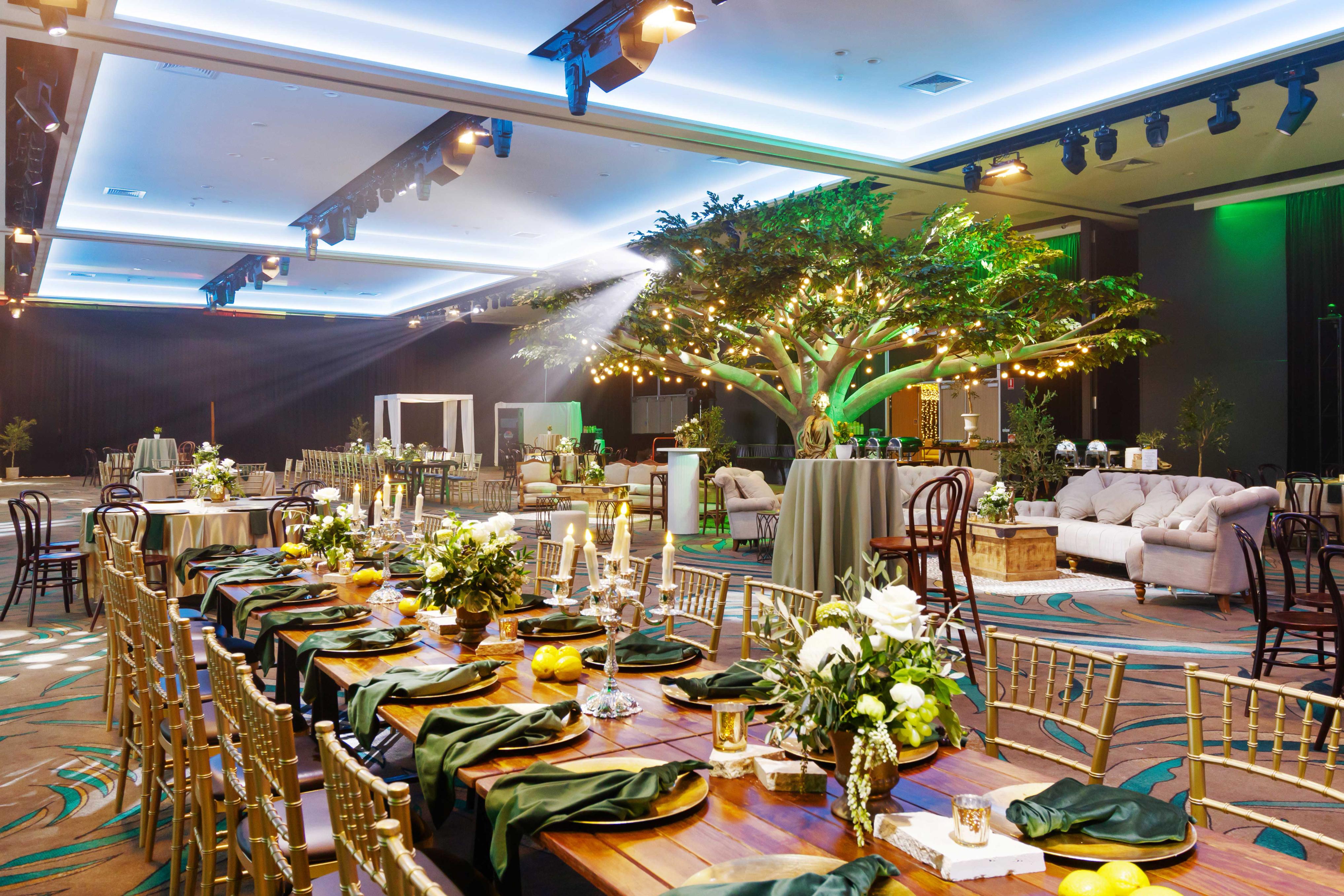
Twenty years is long enough to know that there is a big difference between an event that looks nice and one that makes you stop when you walk into the room.
It is rarely one big thing that creates that difference.
It is hundreds of decisions. Creative ones, practical ones and tiny ones nobody will ever notice. Except us. We are the ones moving a candle 20 millimetres to the left.
For 20 years, Splash Events has styled weddings, corporate events, parties, beach ceremonies, ballrooms, private properties and just about everything in between. We have watched trends come and go, learnt a few lessons the hard way and worked out which design rules really do make a difference.
We still love what we do, and forever evolving. But after two decades, there are a few things we know for sure.
Here are 20 of them.
1. Guests don’t notice ‘nice’ styling
Yep, believe it or not, sometimes ‘nice’ styling isn’t enough.
Guests tend to notice the bad and the brilliant.
They notice when a room feels bare. When a centrepiece looks like it’s time-travelled straight from the 80s and landed among everything modern. When colours clash, placement looks messy or things simply don’t work together.
They also notice when the styling is amazing. They walk in and say, “Wow.” They might not even know why, but we do. The proportions are balanced, the spacing feels right and their eye goes exactly where it’s meant to. Whether it’s bold and dramatic or beautifully understated, everything works together.
‘Nice’ can disappear somewhere in the middle. Everything looks good, but nothing really grabs them.
For us, that’s where the extra care comes in. Placement, proportion, flow and all those tiny details turn a room that looks nice into one that makes people stop and take it in.
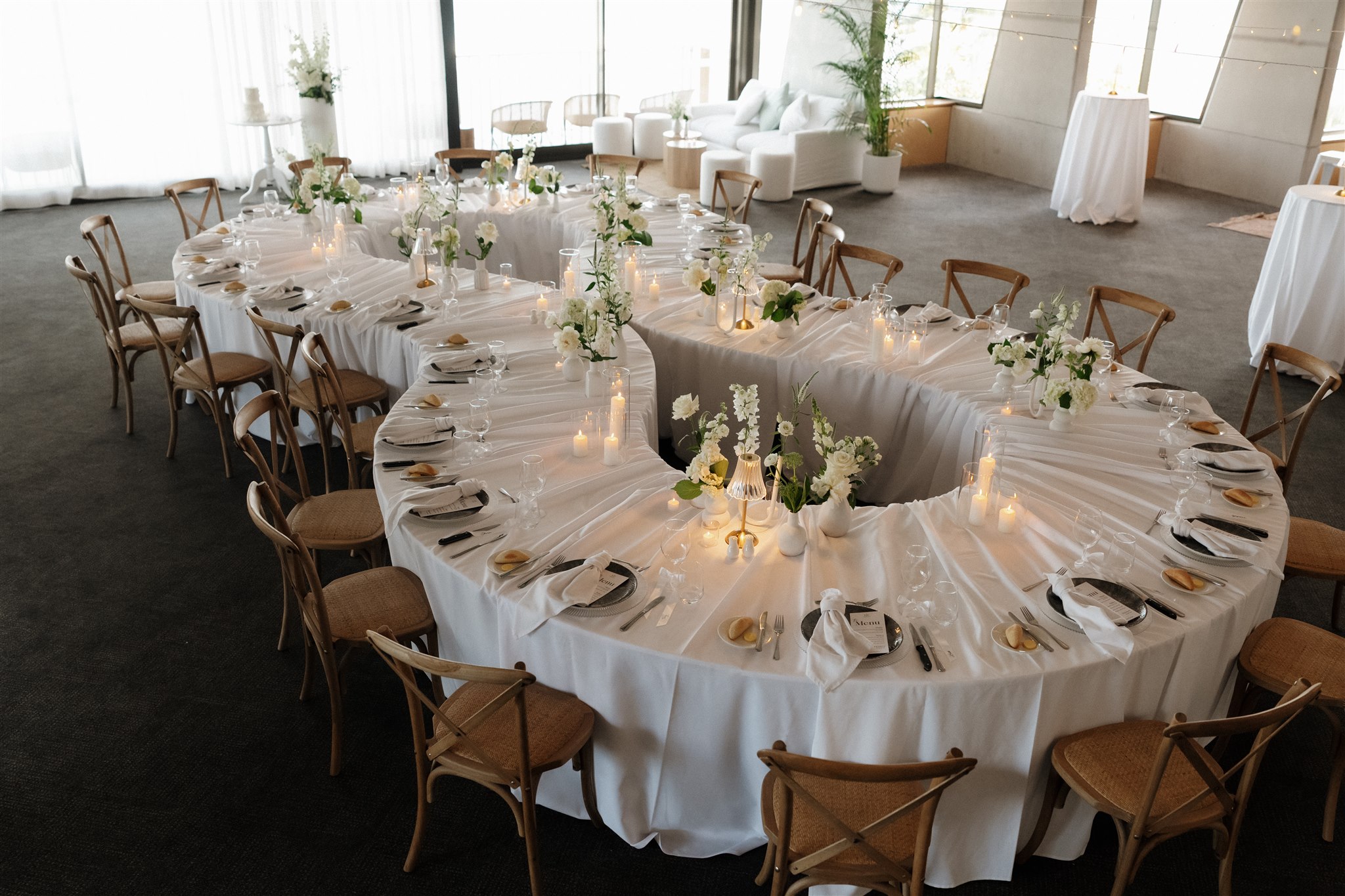
2. Placement matters
We work in millimetres.
From perfectly spaced high bars and aligned chairs to centred menus and carefully placed candles, we look at how everything sits together.
At room level, placement creates space and flow. On the table, it creates balance. And if something is meant to be symmetrical, we make sure it actually is. Nearly centred is not centred.
Even beautiful pieces can look like a dog’s breakfast when the placement is off.
Guests won’t know what we moved. They’ll just know the whole thing feels right.
3. A good colour palette needs balance
Start with one dominant colour, then build around it with supporting tones and accents.
Everything doesn’t need to match exactly. In fact, it usually looks better when it doesn’t. Different shades, textures and materials give a palette more depth and stop it feeling flat.
And always take the venue into account. Timber floors, black chairs, sandstone walls, green gardens or a blue ocean are already part of the palette whether you planned for them or not.
4. There’s a reason things look good in threes
Three candles. Three cylinder vases. Three objects at varying heights.
We use this constantly.
Odd numbered groupings tend to feel more natural and interesting to the eye than everything sitting in perfect pairs. It is one of those little design rules that just works.
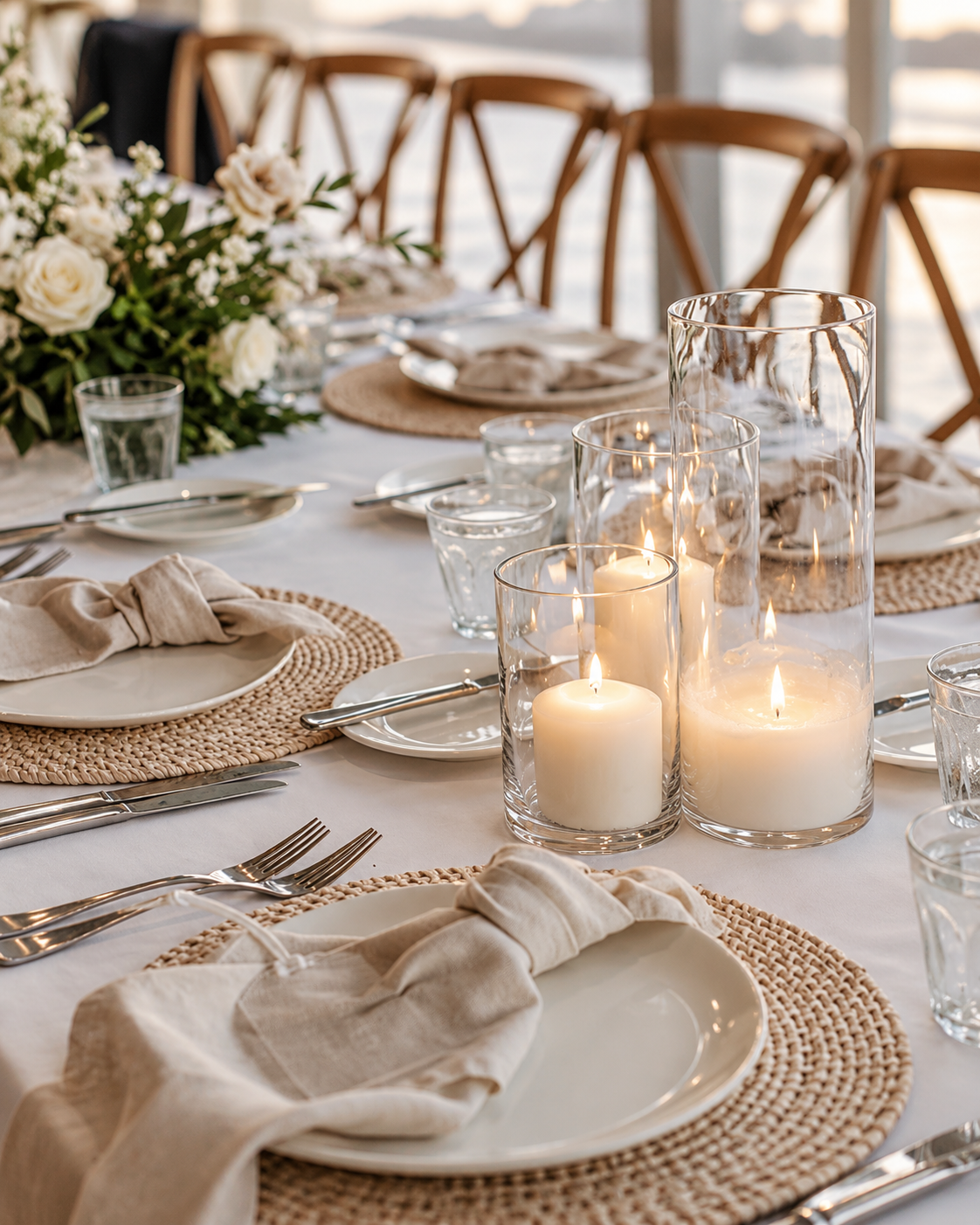
5. Levels and layers matterPut everything at exactly the same height and a room can quickly feel flat.
We vary the height of centrepieces, flowers, candles and cylinder vases. In lounge settings, different seating and table heights can completely change the space.
Then come the layers. Linen, glassware, stationery, florals, candlelight and texture build on one another.
Levels give a design movement. Layers give it depth. Together, they make a space feel finished rather than simply filled.
6. Less is more, but it needs to look deliberate
We love understated styling when it suits the event.
Not every table needs more candles. Not every wall needs something on it. Not every empty corner needs furniture.
But there is a difference between understated and sparse.
Less still needs to feel balanced, deliberate and finished. Knowing when to stop is important. So is knowing when something simply looks unfinished.
7. Your chairs can make or break the look
There’s a reason we used to cover venue chairs with chair covers and sashes. We knew how much they affected the room, so we literally just hid them.
These days, the chair itself is part of the design. Its colour, shape and material should complement the tables, the venue and the style you’re creating.
One chair might not seem like a big decision, but put 100 of them in the same room and that choice has an enormous effect on the overall look.
The same principle applies to anything you use in volume. Multiply a small decision by 100 and it’s not such a small decision anymore.
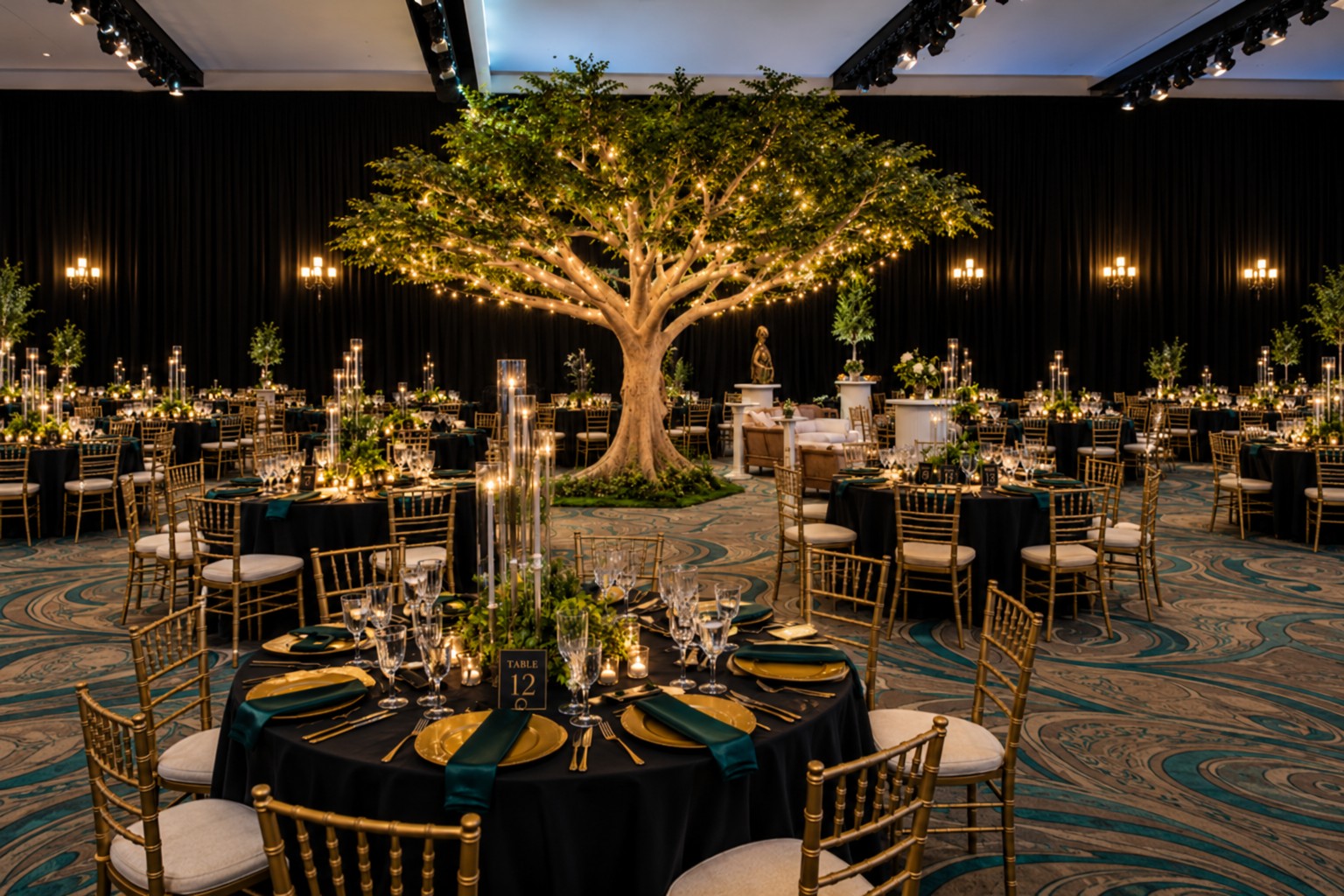
8. Look at the whole room
It is easy to get caught up in a gorgeous tablescape and forget to stand back.
We look at the whole space.
Is there a huge blank wall? An unattractive area we want to disguise? A corner that feels forgotten? Something guests are going to see in every photograph?
Sometimes we will soften an area with plants, cover it with draping, change the lighting or create a feature that draws the eye somewhere else.
Good styling is not only about what you add. It is also about knowing what you want people to notice.
9. Flow matters
Where do guests enter? Where will they naturally walk? Where will they stop? Where is the bar? Can they move easily between tables? Where will everyone congregate once the music starts?
These things matter.
Styling is not just about filling a room with beautiful things. The space still needs to work once it is full of people.
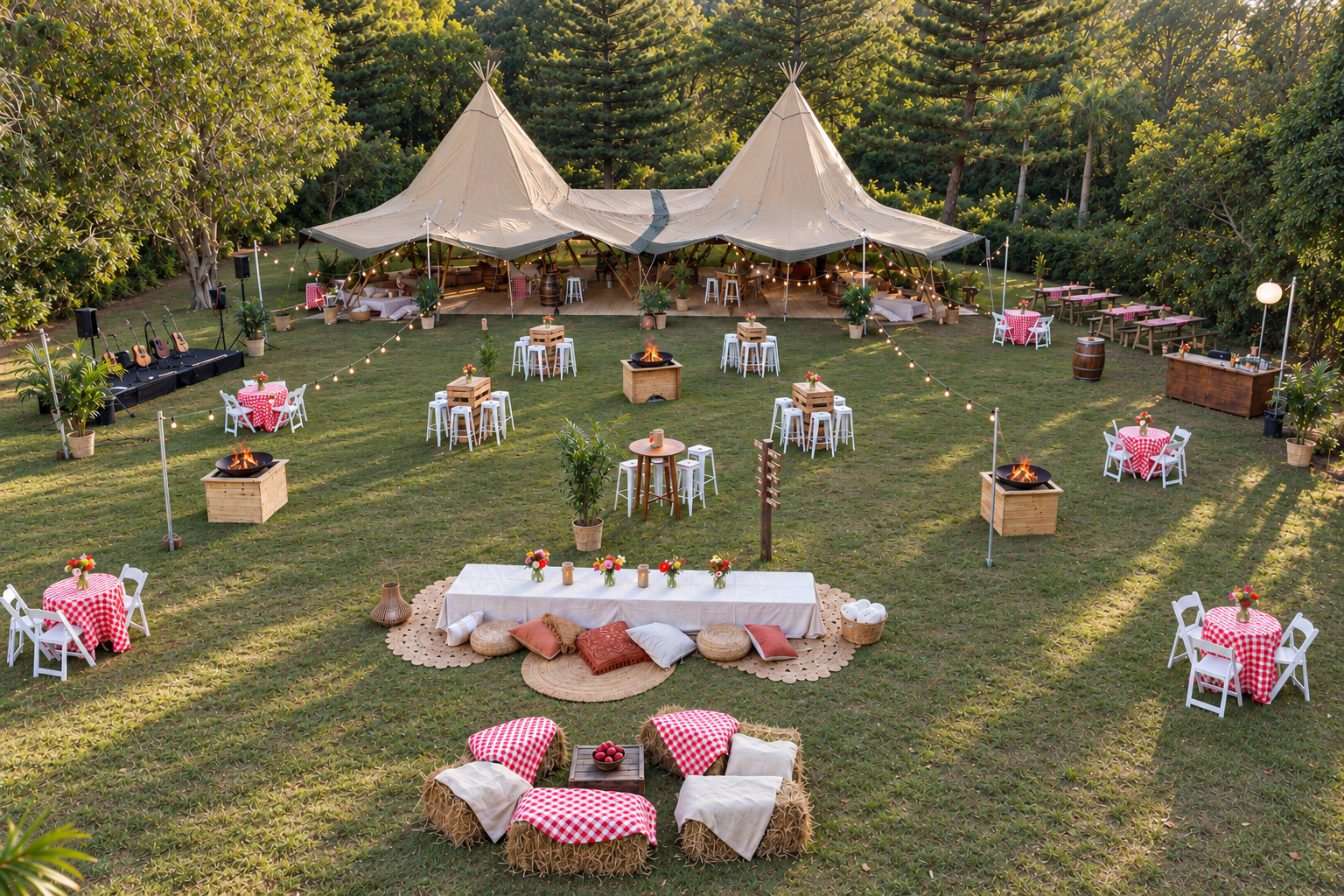
10. Two spaces, one wedding
The ceremony introduces the look and feel of the day. The reception steels the show.
Your ceremony and reception don’t need to look identical, but they should feel like they belong to the same wedding.
Colour, florals, materials and smaller details can carry through from one space to the next.
A relaxed outdoor ceremony can lead into a dramatic evening reception. Each space can have its own atmosphere while still feeling connected.
11. Everything on the table has to work together
The napkin fold. Candle heights. Menus sitting straight. Glassware. The spacing between place settings. Chairs perfectly aligned.
Then there is the bigger picture of the table itself. Linen, florals, candles, stationery, cutlery, glassware and chairs all need to work together.
A beautiful table is really a hundred small decisions.
Guests may never consciously notice every single one of them, but together they are what make something feel polished and finished.
We notice them. That is our job.
12. Styling is a lot less glamorous than it looks
The finished photographs are glamorous.
Getting there often is not.
Behind every event is a warehouse team cleaning, prepping and packing. Furniture gets wrapped. Boxes get loaded. Trucks and vans get packed. Then it all has to be unloaded, carried, assembled, installed and styled.
We have worked in pouring rain and scorching heat. We have carried lounges upstairs, climbed ladders, climbed trees, lugged furniture across grass and sweated through more event setups than we could possibly count.
Then the boxes disappear, the candles are lit, everything is in place and somehow it looks effortless.
That is the magic.
There is just a hell of a lot of work behind the magic.
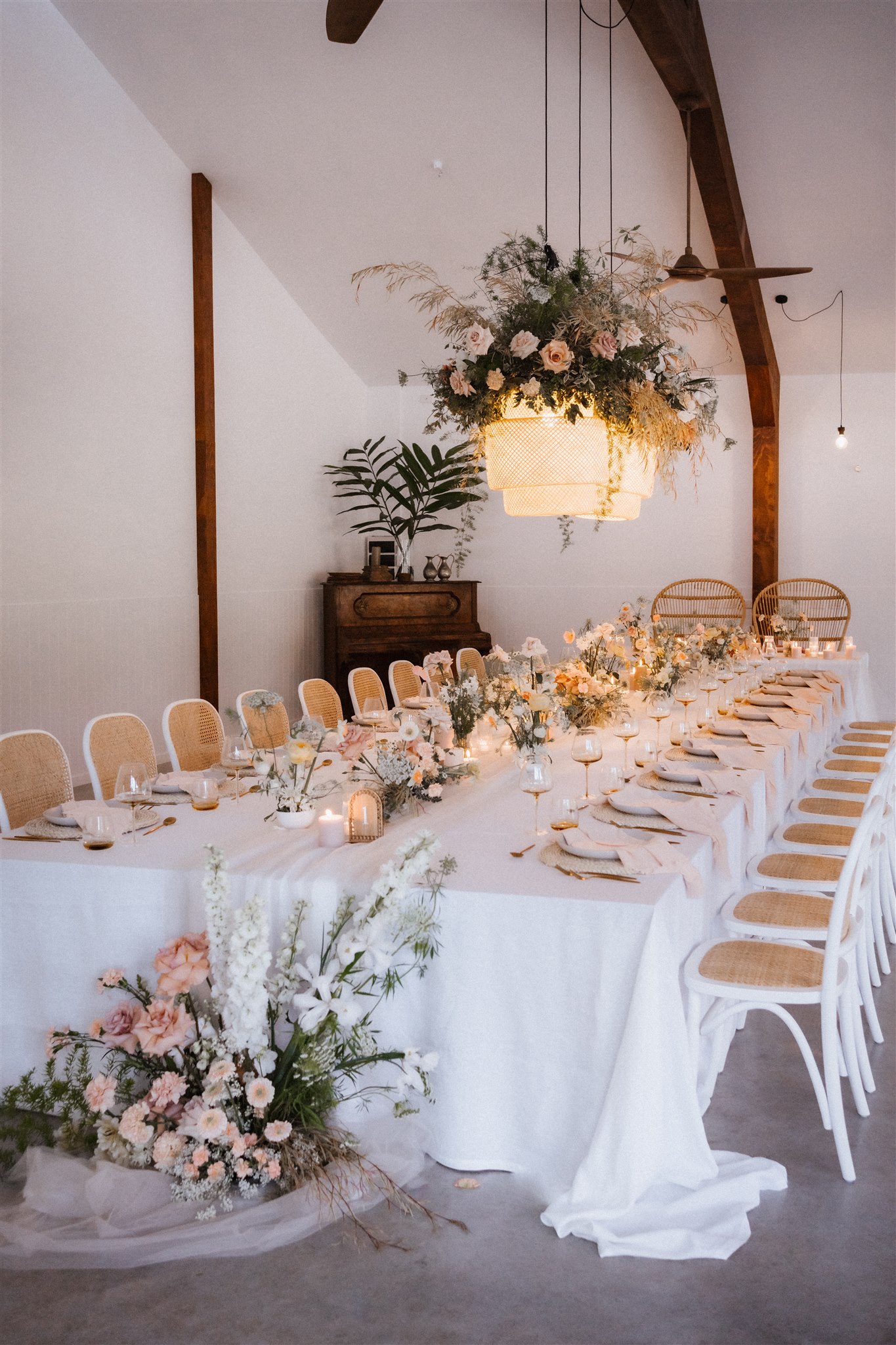
13. DIY is always more work than you think
DIY can absolutely work, but know what you are signing up for.
Someone has to collect everything. Fit it into cars. Transport it. Unload it. Carry it in. Set it up. Style it. Fix whatever does not quite work.
Then, when the event finishes and everyone else is heading home, someone has to pack it all down, load it again, store it and return it.
And you will probably need more helpers than you think.
If you genuinely enjoy that side of things, brilliant. But if you would rather get ready, have a glass of champagne and enjoy your own event, think carefully about how much you want to take on.
14. Pinterest and actually putting it together are a whole different ballgame
We love Pinterest. It is fantastic for working out what you are drawn to.
But saving a beautiful table, ceremony, floral installation, colour palette and bar onto one board does not mean those five things are going to work together in one room.
Then there is the venue, scale, guest numbers, budget, access and the physical reality of actually building it.
Pinterest gives you the inspiration.
Turning all of those ideas into one event that works beautifully in real life is a whole different ballgame.
15. Outdoor event? Always have a backup plan
We love outdoor events. We also know better than to trust the weather.
Always have a backup plan and work through it well before the day.
Where will the ceremony move? What happens to the furniture and florals? What changes if rain comes in? When does the decision need to be made?
We will make Plan B look just as beautiful, but you need to feel comfortable with it too.
If the weather turns, the last thing you want is to be making rushed decisions about something you have never properly considered.
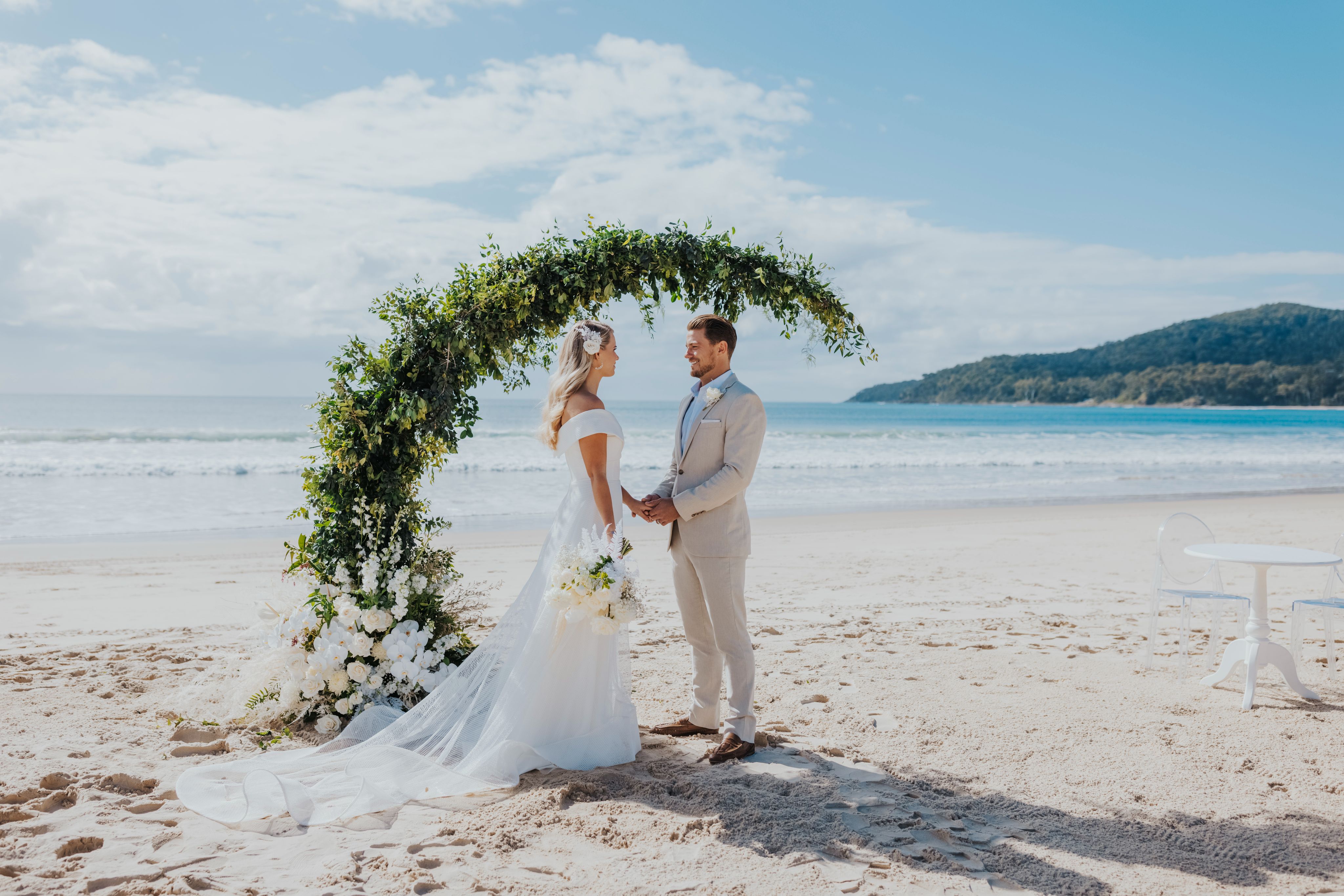
16. Trust your suppliers
You chose them for a reason.
Your florist knows flowers. Your photographer understands light. Your venue knows its space. Your stylist knows what will work visually and practically.
These people do this day in and day out. They have usually already seen the thing you are worried about, solved the problem you have not thought of yet and know where your money will make the biggest difference.
Use their experience.
The best events happen when great suppliers are trusted to do what they are good at.
17. Think about your guests, not just how it looks
A beautiful event should also be a comfortable one.
Is the ceremony sitting in full sun? Do you need umbrellas or shade? Could it get cold later? Will heaters help? Are there older guests who need somewhere comfortable to sit? Does a cocktail event have enough seating and enough places to put a drink?
Can guests see what is happening? Can they move around easily? Do they know where they are supposed to go next?
These are not always the glamorous decisions, but they are the things guests feel.
And guest experience matters.
18. The entrance is the beginning of the event
We particularly love this one for corporate events.
Guests should not have to reach their table before the event starts to feel special.
The entrance is the first opportunity to change the mood. It can introduce the colour palette, the brand, the theme or simply make people think, okay, this is going to be good.
A strong arrival sets the expectation for everything that follows.
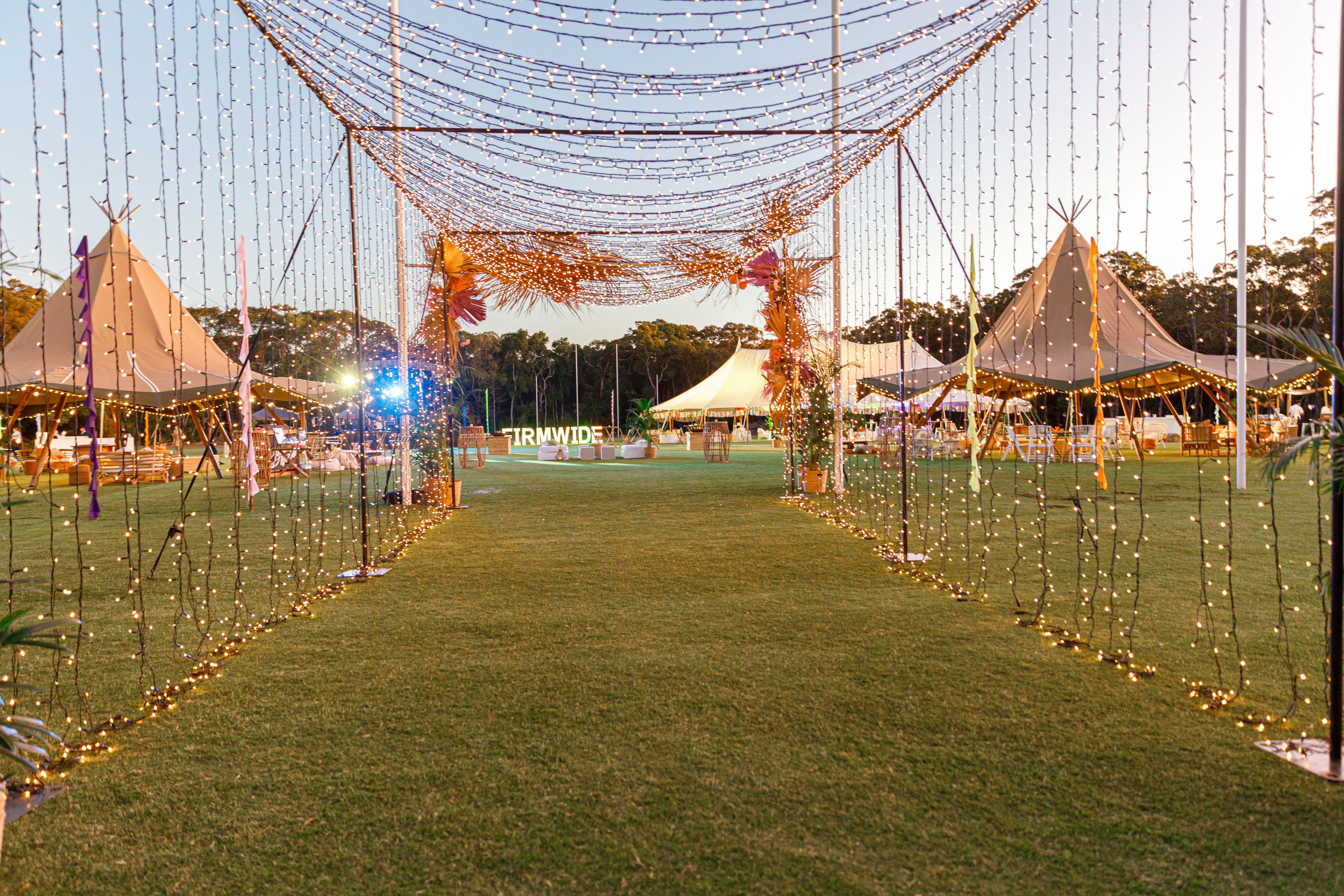
19. Lighting changes everything
Never judge an event only by how the room looks during setup.
The sun goes down. The overhead venue lights come on. Candles are lit. Guests arrive.
Lighting changes colour, atmosphere and what your eye is drawn to.
We have seen fairly ordinary spaces transformed with beautiful lighting, and beautifully styled spaces lose their impact when the lighting is wrong.
It is part of the design, not something to think about at the end.
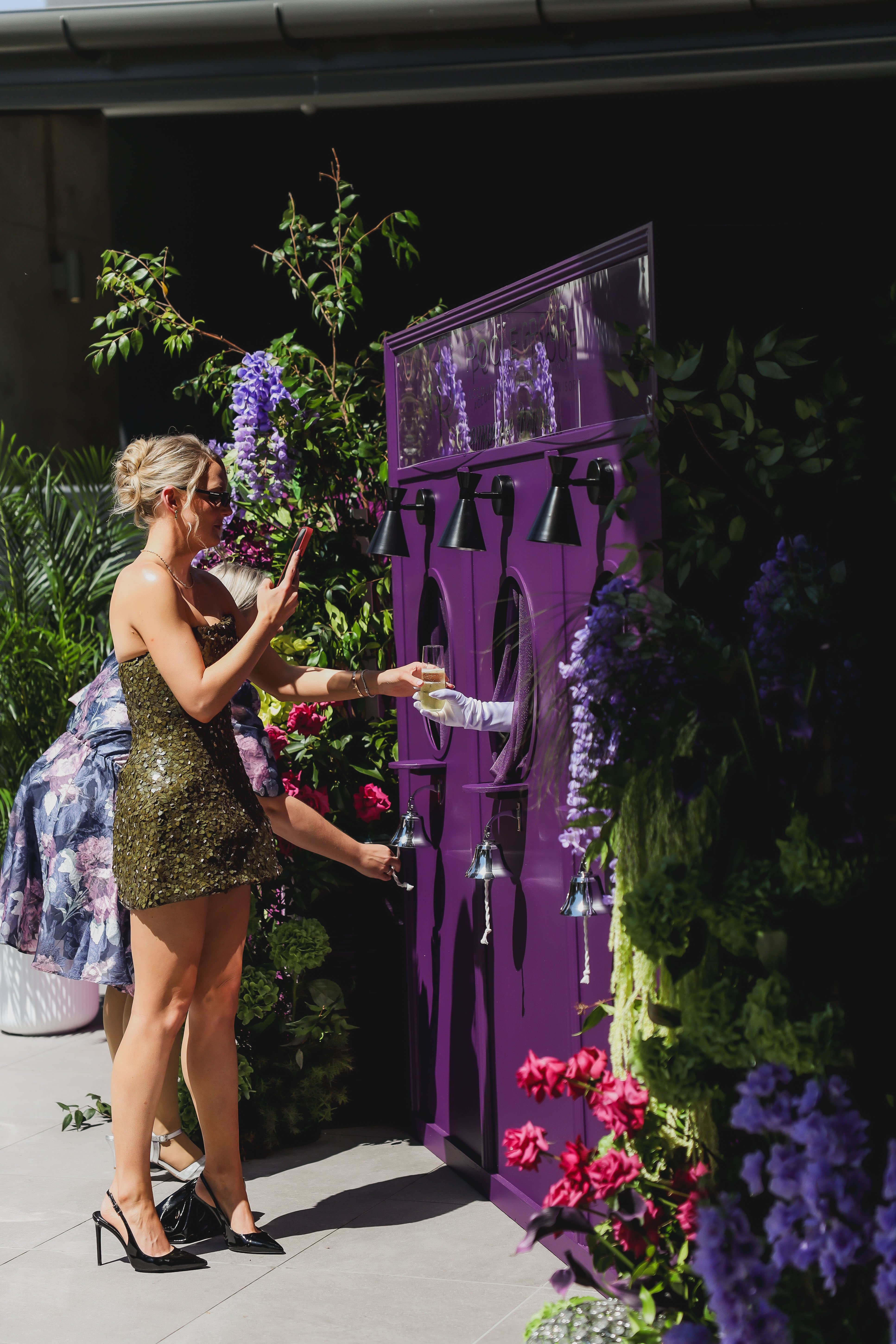
20. Give people a photo moment worth photographing
We are not necessarily talking about a traditional photo booth.
It could be an amazing entrance, a statement backdrop, champagne tower, installation, floral feature or beautifully styled branded moment.
The best photo moments are the ones guests naturally gravitate towards.
If people are pulling their phones out without being told to, you have probably got it right.
After 20 years…
Styles change. Trends change. Venues change. Even some of the rules change.
But our job is still essentially the same.
To walk into an empty space, see what it could be, obsess over the big things and the tiny things, solve the problems nobody else needs to know about, and leave behind something that feels completely effortless.
Even when we know very well that it wasn’t.
And yes, we will probably still move that candle another 20 millimetres.
For a look at the people, standards and behind-the-scenes work that shaped Splash, read 20 Years Behind the Reputation.
Let’s bring your event together
Have a wedding, corporate event or celebration in mind? Tell us about your venue, your ideas and how you want it to feel. We’ll bring the design, styling and experience to pull it all together.
Talk to our styling team.